Written by: Maria Bonaddio and Alyssa Agolia

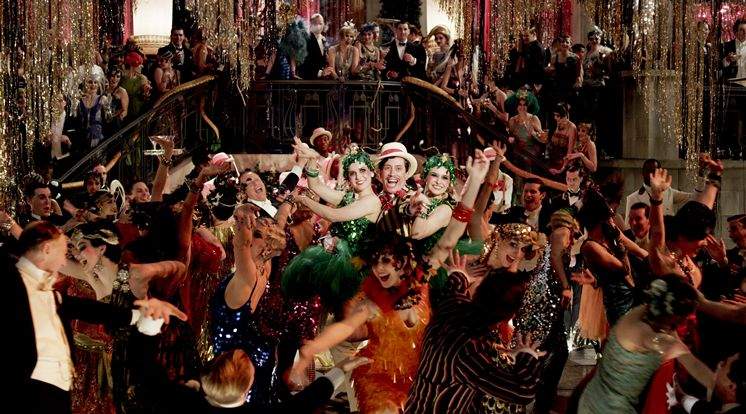
Welcome to our Blog Post! If we were to teach 5th graders, we would like to teach them about the Jazz Age. The Jazz Age was a cultural period and movement that took place in the 1920s within America. This era is when both new styles of music and dance emerged. We would love to teach students about the culture of this era including the history of flappers, musicians, filmmakers, entertainers and more. During this time, the people of America went through many social and political changes. For the first time, more lived in cities than on farms and the economic growth had gone up immensely. The American Dream was the belief that anyone, regardless of race, class, gender, or nationality, can be successful in America. One book that portrays the American Dream perfectly is The Great Gatsby by Scott F. Fitzgerald. The Great Gatsby details the culture of the “Roaring” 1920s as a pre-depression time of excess wealth and an obsession with flaunting society’s traditions. Gatsby and other characters fully explore these themes and the effects they have on society, especially their pursuit of money, extravagant lifestyle, and perceived status. This important book artfully integrates history into literature which is a great way to teach students about the era.
If you decide to teach The Great Gatsby, we are going to give you fellow future teachers some ideas that go into depth about what tools you can use teach the Great Gatsby! One main tool you could utilize is: Literature Circles.
Literature Circles are groups that are assigned that will go through the book, assignments, and activities together. In Literature Circles, small groups of students gather together to discuss a piece of literature in depth. The discussion is guided by students’ response to what they have read. Students may talk about events and characters in the book, the author’s craft, or personal experiences related to the story. Literature Circles provide a way for students to engage in critical thinking and reflection as they read, discuss, and respond to books. Collaboration is at the heart of this approach. Students reshape and add onto their understanding as they construct meaning with other readers. Literature Circles guide students to a deeper understanding of what they read through structured discussion. What is great about using Literature Circles is that they incorporate multiple intelligences that are required of teachers to use in their lesson plans. Some of the intelligences it uses are:
Interpersonal Intelligence is the ability to understand and interact effectively with others. It involves effective verbal communication, the ability to note distinctions among others, sensitivity to the moods and temperaments of others, and the ability to entertain multiple perspectives. Since Literature Circles connect and work with others to explore a deeper meaning of the text, it uses interpersonal.
Linguistic Intelligence is to think in words and to be able to use language for expressing and understanding complex meanings. Linguistic reflects on the use of the language in everyday life. Since students will have to break down and interpret text within the book, they will be using skills that are learned from linguistic intelligence.
Intrapersonal Intelligence is to think about and understand one’s self. To be aware of one’s strengths and weaknesses and to plan effectively to achieve personal goals. Includes reflecting on and monitoring one’s thoughts and feelings and regulating them effectively. A few of the activities that have children make connections to their own personal lives uses intrapersonal by having them analyze themselves and seek understanding.
1. Reading time: Give students 30 minutes in the hallway to read a chapter aloud together. This will not only help with verbal skills but getting to know how to work with others and take turns. Once they have finished, they can move on to the next activity assigned.
2. Packets: Create a packet in which students in groups fill out together after reading. This will make them work to understand what is going on in the text. These packets would include questions of the text, that could be answered with the help of groupmates. Here are some sample questions used from Zelasko:
- Explain how Fitzgerald uses setting to emphasize the differences between the social
classes. - In the story, Tom and Daisy are a part of the established upper class, while Gatsby is
part of the class known as the nouveau riche. Decide which social group you would want
to belong to and explain why. - Compare and contrast the characters of Tom and Gatsby.
- Debate that The Great Gatsby illustrates the theme of the American dream being
corrupted by the desire for wealth. - Explain how The Great Gatsby reflects the Jazz Age.
- Discuss what led to the downfall of Gatsby’s dream.
3. Throughout the book, have students pick 2 words they don’t know per chapter and have them define it and use it in context. This will not only help students understand what they are reading but it will increase their vocabulary as well. Some examples from the text are:
Mesmerize
To hypnotize, spellbind, fascinate.
Context: His house was full of wonderful objects and mesmerizing friends.
Sardonic
Disdainfully or skeptically humorous; derisively mocking.
Context: Nick Carraway is sardonic and quiet.
4. Creating Poster Boards: Midway through the book, make students create a poster in class picking one symbol in the book. For example: the green light, the owl eyed man, the billboard, etc. This is a fun and creative way for students to work together in their circles to look at what symbols are shown, what they represent, and why they’re important.
5. Pick a character: Each person in the Literature Circle will pick a character and connect to how they relate/connect to their own lives. Then they will go around in their circles and tell their groupmates who they chose and how and why they connect. For example: I see myself as Gatsby because I am hardworking, persistent, etc.
6. Act out a scene: Make each literature group pick a significant moment throughout the book that connects to the American Dream. After they present, make them explain why that scene connects. They could include scenes possibly from:
- The dinner party
- Gatsby and Daisy’s meeting before he went off to war
- The rendezvous between Daisy and Gatsby at his mansion
- The hotel scene
Works Cited
M., R., & Ed. (1973, November 30). Reading and Teaching the Novel, Volume 3. Retrieved from https://eric.ed.gov/?id=ED105520 This source is important because it goes in to depth of how to teach this novel. It explains and explores the text along with its themes and symbolism. It also includes a teacher’s guide with questions, significances, and connections that the unassisted reading would not have encompassed. Overall, this source is important because it helps suggests some ideas on how to teach the Great Gatsby.
Zelasko, K. (2002). The Great Gatsby. [Lesson Plan]. Retrieved November 21, 2019, from https://files.eric.ed.gov/fulltext/ED481200.pdf This source is important because this lesson plan presents activities designed to help students understand the author’s intentions and craft .The main activity of the lesson plan, involves students in producing and presenting readers’ theater versions of scenes from the novel. It includes objectives, materials, procedures, adaptations, discussion questions, evaluation methods, extension activities, annotations of suggested readings and web links, vocabulary, and related academic standards and benchmarks addressed in the lesson plan. The lesson plan also contains a description of a video clip related to the lesson, comprehension questions related to the video clip, and answers to those comprehension questions. (RS)
 American Literature for Elementary Education