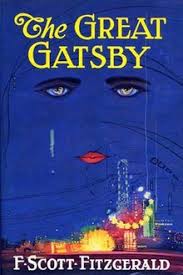
Welcome back to my Blog Post! If you read last weeks post, you learned that The Great Gatsby is a novel I would like to teach my future 5th grade class! I would love to teach this novel because I believe it is a great and insightful way to teach children about the Jazz Age. So today, I am going to give you fellow future teachers some ideas that go into depth about what tools you can use teach the Great Gatsby!
One tool you could use is: Literature Circles which are groups that are assigned that will go through the book, assignments, and activities together.
A few activities/exercises they could do within the Literature Circles are:
A Gallery Walk: Play some 1920s music and display photographs of aspects of daily life — from prohibition to fads, fashion and trends like flagpole-sitting. You might also include famous newspaper headlines or news stories from the 1920s, whether it’s the flight of the Spirit of St. Louis or the crash of the stock market. Post short written texts that will help elucidate “The Great Gatsby” or the time period around the room, too. They will be going around with their group to each station and should be filling out a chart of what observations they have noticed and learned.
1. Reading time: Give students 30 minutes in the hallway to read a chapter aloud together. This will not only help with verbal skills but getting to know how to work with others and take turns.
2. Packets: Create a packet in which students in groups fill out together after reading. This will make them work to understand what is going on in the text. These packets would include questions of the text, that could be answered with the help of groupmates.
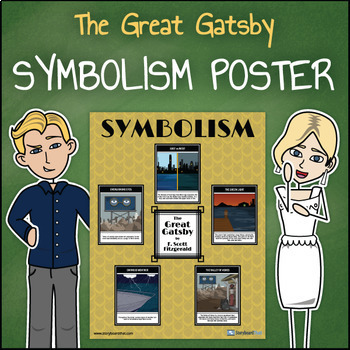
3. Creating Poster Boards: Midway through the book, make students create a poster in class picking one symbol in the book. For example: the green light, the owl eyed man, the billboard, etc. This is a fun and creative way for students to work together in their circles to look at what symbols are shown, what they represent, and why they’re important.
4. Pick a character: Each person in the Literature circle will pick a character and connect to how they relate/connect to their own lives. Then they will go around in their circles and tell they’re groupmates who they chose and how and why they connect. For ex: I see myself as Gatsby because I am hardworking, persistent, etc.
5. Act out a scene: Make each literature group pick a significant moment throughout the book that connects to the American Dream. After they present, make them explain why that scene connects.
– Interpersonal Intelligence is the ability to understand and interact effectively with others. It involves effective verbal communication, the ability to note distinctions among others, sensitivity to the moods and temperaments of others, and the ability to entertain multiple perspectives. All of the activities connect with Interpersonal Intelligence which is the point of Literature circles, to connect and work with others to explore a deeper meaning of the text.
–Linguistic Intelligence is to think in words and to use language to express and understand complex meanings. Linguistic reflects on the use of the language in everyday life. I believe all of these activities connect with Linguistic as students have to break down and interpret text in different ways.
– Intrapersonal Intelligence is to think about and understand one’s self. To be aware of one’s strengths and weaknesses and to plan effectively to achieve personal goals. Includes reflecting on and monitoring one’s thoughts and feelings and regulating them effectively. I believe activity four has students connect to this important intelligence as well as who they are.
Works Cited
Brown, A., & Schulten, K. (2013, April 25). Teaching ‘The Great Gatsby’ With The New York Times. Retrieved November 18, 2019, from https://learning.blogs.nytimes.com/2013/04/25/teaching-the-great-gatsby-with-the-new-york-times-2/. This source is important because it helps suggest some ideas for teaching. Student’s learn in different ways so it’s good to have different backups. The more prepared you are the better. If a group is having too much of a struggle with an activity, you can always switch it with another one that is more clear.
Multiple Intelligences. (n.d.). Retrieved from http://www.pz.harvard.edu/projects/multiple-intelligences. This source is important for the final project because it explains what the multiple intelligences are. There is a variety which is important because it helps to appeal to students. Knowing how to target the various interests and learning styles of students can help teachers to plan engaging and effective lessons.
 American Literature for Elementary Education