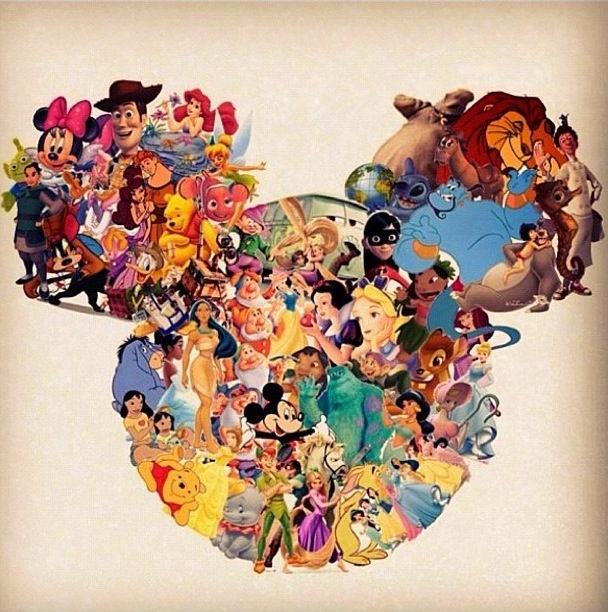
With the recent launch of Disney plus, we thought what better way to teach students about the principles of transcendentalism that are depicted in Ralph Waldo Emerson’s “Self Reliance” than through Disney movies? In order to teach this work successfully to a fifth or sixth grade class, Michelle and I have decided to create a teaching tool that will provide educators with a list of age-appropriate Disney films along with a short description on how each movie relates to one or more of the beliefs of Transcendentalism like nonconformity, self-reliance, intuition, simplicity, or the importance of nature. This way, other teachers have the ability to create their own lesson plan around our tool as they see fit. We are planning to engage Gardner’s spatial and musical intelligences. I think this project is needed and will be useful for elementary education teachers because it allows students to learn the beneficial ideas that are depicted in Emerson’s work, but in a new, fun, and educational way.
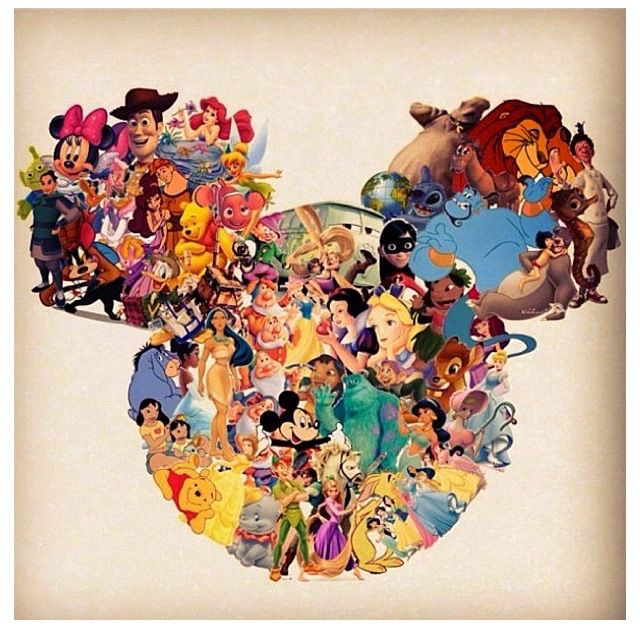
Transcendentalism and “Self-Reliance” can be particularly difficult for students of this age to understand. We are optimistic that teachers and students will be able to take a lot from this teaching tool because it allows students to make connections between movies they are familiar with and the new concepts that they are being presented. This tool with help cultivate their minds. As stated above, we believe we can best teach this text by engaging Gardner’s spatial and musical intelligences. In terms of Gardner’s spatial intelligence, we hope that students are able to take what they see in each movie, like the themes, and then relate them to the pillars of Transcendentalism. This allows students to have the ability to interpret visual images and then put forth their ideas. In terms of the musical intelligence, we want students who think in this way to be able to think, feel, and process information primarily through sound. All the Disney movies we selected have at least one song that a student with this intelligence can listen to and translate what they took away from it. The goal is for them to relate the song back to the task being presented, which is what Transcendental belief does it mimic?
Thus far, we have found 10 Disney movies that acknowledge the ideals of Transcendentalism. We still have to relate each film to a specific Transcendental belief. We are going to make sure we get this done by analyzing the films we selected and then determine which tenet or tenets belong with each film. We plan on doing this within the next week. We feel as though we are right on track to finishing and producing a project we are both proud of.
We want to create a tool that will encourage instructors to teach “Self-Reliance” in this particular way because we believe that Emerson’s book can help children develop skills to make themselves self-reliant by realizing it takes courage to be an individual and that the way we use our minds will guide our lives by controlling what we think and how we feel. That being said, the text itself is a hard read so we took into consideration that many children love Disney movies and this would therefore help them learn the concepts in the text best. Students will hopefully develop more than just skills but a mindset to be self-sufficient. I am really looking forward to seeing the final product!
Annotated Bibliography
Blue, T. (2015). A Theory of Multiple Intelligences: Working with the Adolescent Brain/Voice. The Choral Journal, 55(9), 57-62. Retrieved from http://www.jstor.org/stable/24335989
This is a credible and academic source because it is a scholarly journal. The source itself, provides the reader with thorough explanations on how to engage Gardner’s multiple intelligences. We thought this would be a good source because the author gives specific examples on how Gardner’s intelligences can be incorporated into daily classroom activities. We will use this to determine what is the best way to engage students who learn best through the spatial and musical intelligences.
Frothingham, O., & Ahlstrom, S. (1972). TRANSCENDENTALISM IN NEW ENGLAND. In Transcendentalism in New England: A History (pp. 105-141). PHILADELPHIA: University of Pennsylvania Press. Retrieved from http://www.jstor.org/stable/j.ctv5137f0.10
This is a credible and academic source because it was found in an academic database. This source focuses on the idea of Transcendentalism. For example, what is it and where it came from. It is important to understand that Transcendentalism is part of Romanticism. The main characteristics of Romanticism include focus on the individual, a celebration of nature, and the reliance on emotion and intuition. We are using this source to gain deeper knowledge on the history behind Transcendentalism and how to properly approach this literary period.
WILLS, J. (2017). DISNEY VALUES. In Disney Culture (pp. 104-132). New Brunswick, Camden, Newark, New Jersey; London: Rutgers University Press. Retrieved from http://www.jstor.org/stable/j.ctt1p0vkn3.7
This is a credible and academic source because it is written by a respected author. This source captures some of Disney’s leading values like simplicity and innocence. The source even brings to light movie examples that fit into these genre values. Disney is known to introduce children to both the good and bad of society. In the end, “good” always conquers evil. We will connect this source to our project by keeping in mind the merits of Disney films and relating them to Transcendental beliefs.
 American Literature for Elementary Education
One thought on “The Tenets of Transcendentalism in Disney Movies”