
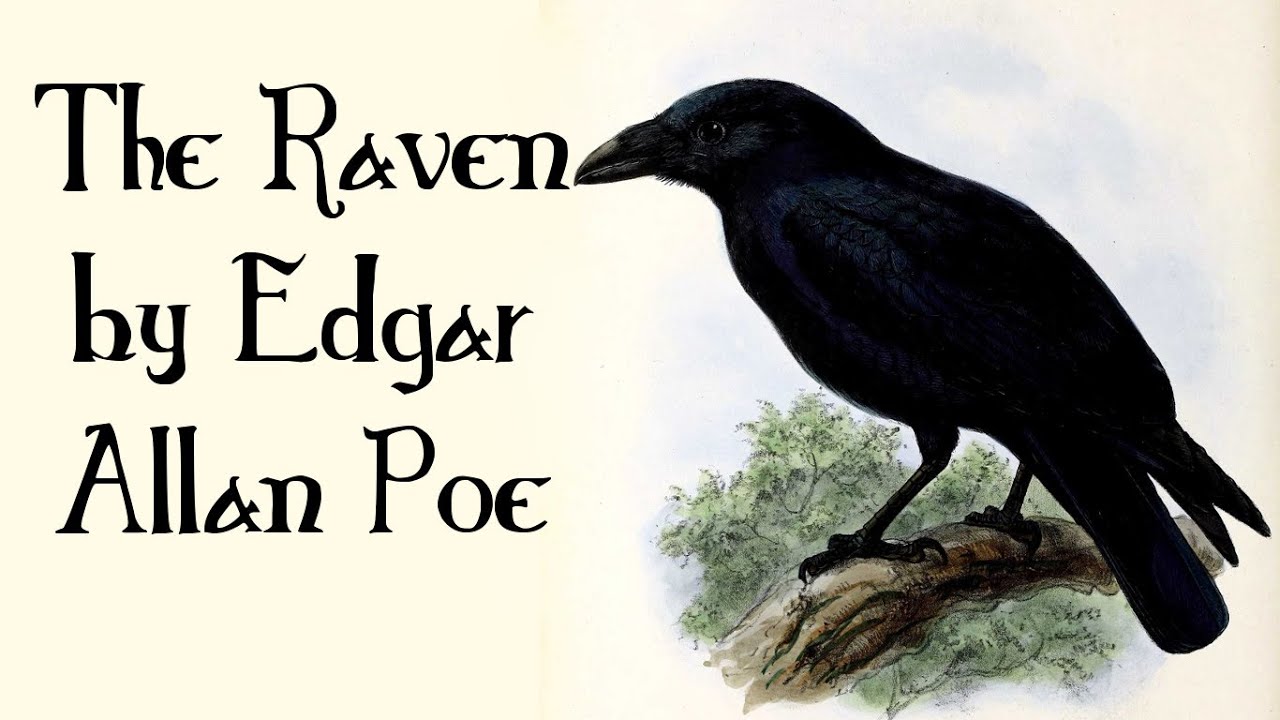
The gothic and romantic are classic literary time periods in English that many readers enjoy. “The Raven,” by Edgar Allan Poe is a representative example of these literary periods, and is a poem that many know and love. In order to effectively teach this work to a fourth-grade class, we have decided to create a podcast as a resource for fellow elementary educators to listen to and take ideas from. In the project, we want to focus on Gardner’s naturalistic and musical intelligences. I believe this is a great resource for other educators because with our podcast, we can be spontaneous, as opposed to a project where we simply list ideas. I think that this poem will challenge our age group and a podcast will help those using our tool understand our ideas better.
This reading can be very difficult for fourth graders, but we are confident that we can effectively teach this text if we appeal to the strengths of the learners. To do this best, we chose the musical and naturalistic intelligences. In terms of Gardner’s naturalistic intelligence, we want those who think this way to understand the importance of the bird and why Poe chose this as a symbol for the theme of this poem. This includes the understanding of the repeated phrase, “Nevermore” and how it interacts with the mind of the narrator. In terms of the musical intelligence, we want those to think in this way to understand how Poe writes and the words he chooses. The poem flows and does not have a rigid structure, which we intend for the students to grasp that idea.
As stated above, we have decided to focus on two intelligences. Alicia has decided to focus on the musical intelligence and I have decided to appraoch the naturalistic one. So far, we have discussed key ideas we want to talk about during the podcast and right now are figuring out how to synthesize the two intelligences into one lesson. Otherwise, we are confident that we will have a good discussion in terms of teaching the same material to different kinds of learners.
We want to create a tool to help other educators teach “The Raven” in this way because we are very excited introducing the poem to this age group because usually it is reserved for an older audience. Also, as a future teacher, I know that I want different tools to explore with from other educators, although I have many ideas I want to share with my peers. I am excited to see the works of my fellow classmates as well to see the final project itself.
Annotated Bibliography
SULLIVAN, T. (2018). How to Create Your Own Successful Podcast. PC Magazine, 145. Retrieved from https://search.ebscohost.com/login.aspx?direct=true&db=f5h&AN=131415872&site=eds-live&scope=site
This is a credible source because it was found in a database and written by Terry Sullivan of whom is a political consultant. This is a popular source. In this article, how to create and tips on creating a successful podcast are evaluated. We are going to use this source as a basis of how to create the podcast itself and how to deliver our material.
Wendy L. Rodabaugh. (1996). Teaching Gothic Literature in the Junior High Classroom. The English Journal, 85(3), 68. https://doi.org/10.2307/820110
This is a credible source because Wendy Rodabaugh is a journal writer that has been studying classroom behavior for a while. This is also an academic source. This teaching tool outlines how to teach gothic and romantic literature in a high school environment, but we can use this as a tool on how to properly approach this literary movement.
Cafiero, G., Christie, P., & Poddighe, S. (2015). Edgar Allan Poe. Acacia Ridge, Qld: Australian eBook Publisher. Retrieved from https://search.ebscohost.com/login.aspx?direct=true&db=nlebk&AN=1478002&site=eds-live&scope=site
This is an academic and credible source because of the research done by these authors. They cite other sources at the end of their text. This is a brief outline of Poe’s life and how to approach his stories as well as his background.
 American Literature for Elementary Education
One thought on “Approaching “The Raven” Using Music and Nature. Geared for Elementary Students.”